
Jun 4, 2026
The True Cost of Taking Wholesale Orders by Phone
Phone orders feel free because there's no software invoice. But when you add up the staff time, errors, and missed revenue, the real cost is significant. Here's how to calculate it for your business.
Why Phone Orders Feel Free
There's no line item on your P&L for "taking phone orders." The phone is already paid for. The staff member is already on payroll. The customer calls, someone writes it down, and the order happens.
The cost is invisible because it's distributed across staff time, error correction, and lost opportunities — none of which show up as a single identifiable expense.
But the cost is real. Here's how to think about it.
The Direct Staff Cost
Every inbound phone order takes time to handle. A typical wholesale phone order involves:
- Answering and identifying the caller: ~1 minute
- Taking the order (products, quantities, confirming availability): ~3–5 minutes
- Confirming back and ending the call: ~1 minute
- Entering the order into the system: ~5–10 minutes
That's roughly 10–17 minutes per order, start to finish, for a staff member being paid to do other things as well.
If your business takes 20 phone orders per day at an average of 12 minutes each, that's 240 minutes — 4 hours of staff time per day — just on inbound order processing.
At $35/hour (a conservative admin rate), that's $140 per day, $700 per week, $35,000 per year in staff cost attributable to phone order processing.
The Error Cost
Phone orders introduce errors in a few ways:
Mishearing or miswriting: A customer says "12 cases of SKU 4819" and the person on the phone writes "4819" but enters "4819" as "4918." The wrong product ships.
Verbal confirmation without a record: A customer calls to amend an order. The change is noted by whoever answers the phone. The person who processes the order later doesn't see the note. The original order ships unchanged.
Price confusion: A rep quoted a customer a price. The customer calls to order and quotes that price to whoever answers. The price in the system is different. There's a dispute.
The cost of a single error — returned shipment, credit note, re-delivery, customer goodwill — is typically far more than the order value itself. Most businesses that track error rates find phone orders generate errors at a meaningfully higher rate than digital orders.
The Missed Order Cost
This one is harder to quantify but often the largest.
A customer wants to reorder at 7pm on a Tuesday. Your office is closed. They think about sending an email but it's easier to just call tomorrow. Tomorrow they get busy. They don't call.
Or: they call, go to voicemail, leave a message. The message gets missed or actioned two days later. By then they've ordered from a competitor who had a portal.
In wholesale, repeat orders from existing customers are the core of your revenue. Every time the process creates friction — the phone isn't answered, the right person isn't available, the customer has to wait for a callback — there's a risk the order doesn't happen, or happens with someone else.
The customers most likely to quietly move their business elsewhere are often your most regular accounts, because they're the ones who notice most quickly when ordering is inconvenient.
The After-Hours Problem
Phone-based ordering only works during business hours. But your customers' businesses don't stop at 5pm.
A café owner doing their weekly stock count at 8pm, a retailer reviewing inventory on a Saturday, a distributor planning next week's orders on Sunday afternoon — none of these people can place an order with a business that only takes orders by phone.
If a competitor offers an online ordering option and you don't, you're handing them the after-hours revenue by default.
The Comparison: Phone vs Digital
| Phone Orders | Digital Orders (App + Portal) | |
|---|---|---|
| Staff time per order | 10–17 min | ~0 (rep submits; customer submits) |
| Available hours | Business hours only | 24/7 |
| Error rate | Higher (verbal, manual entry) | Lower (digital, confirmed at source) |
| Order visibility | After entry (hours delay) | Real-time |
| Customer experience | Depends on who answers | Consistent, self-service |
| Cost to process | ~$7–10 per order at admin rates | Negligible |
What to Do About It
The switch from phone-based order-taking to digital doesn't have to be all-or-nothing. Most businesses move in stages:
- Field reps move to a mobile order app first — orders they were taking on paper or by phone during visits are now submitted digitally on-site
- High-frequency repeat accounts are invited to a B2B portal to reorder themselves
- Inbound calls gradually decrease as customers learn they can order online
- Phone orders become the exception rather than the rule — reserved for genuinely complex or urgent situations
The staff time that was going into order entry gets redirected to customer service, account management, and the parts of the job that actually require a human.
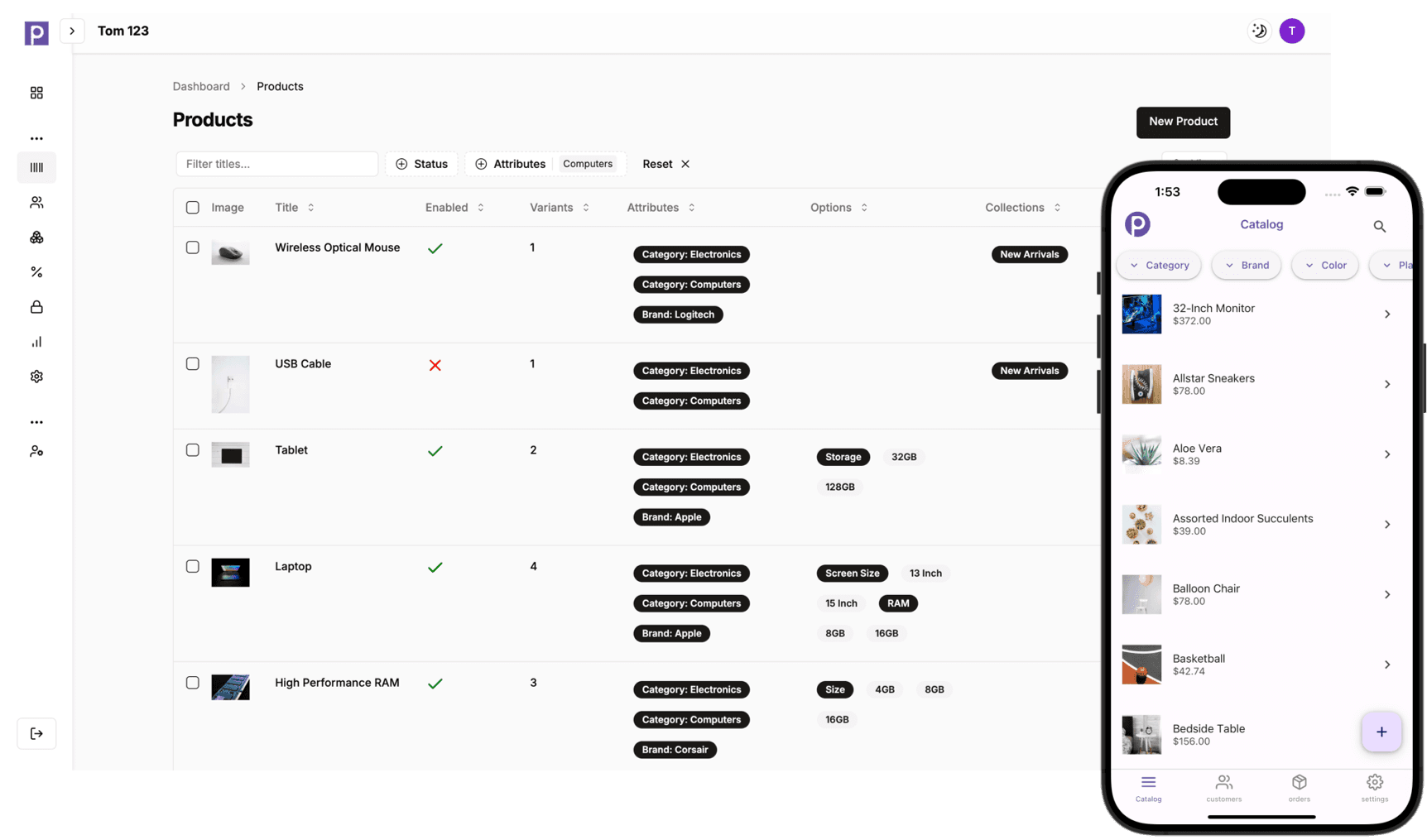
Phone orders are a cost your business is already paying. Prodja gives you the tools to reduce that cost without disrupting the customer relationships you've built.